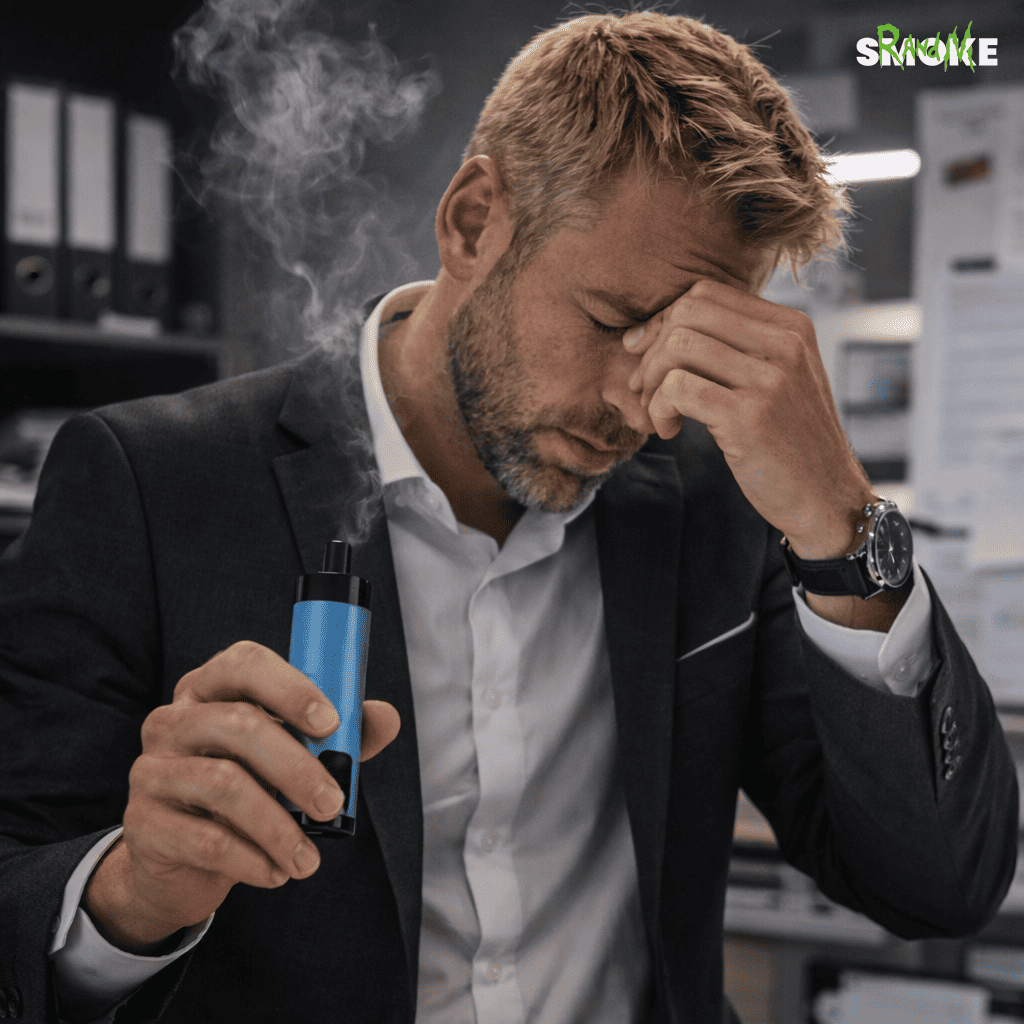
Long day, difficult conversation, full to-do list, and almost reflexively, the RandM lands in your hand. Many vapers report this: stress and vaping are somehow connected. But why?
The answer lies in biochemistry and learned behavioral patterns. An overview of all RandM models can be found on the product overview.
What stress triggers in the body
Under stress, the body releases cortisol and adrenaline. Cortisol is the most important stress hormone: it increases blood sugar, sharpens attention, and puts the body on high alert. This is useful for short-term stress – but burdensome for chronic stress.
At the same time, dopamine activity in the reward system decreases during stressful phases. The body seeks compensation.
Why nicotine is so appealing at this moment
Nicotine releases dopamine within seconds. Exactly what stress had reduced. At the same time, studies show that nicotine can temporarily dampen cortisol release, which subjectively feels like relaxation.
The insidious thing is that it's not real relaxation. The body relaxes from the stress caused by nicotine withdrawal, not from external stress. Regular vapers experience a slight withdrawal tension between puffs, which they perceive as stress. The next puff alleviates this feeling. This feels like stress management, but it's symptom treatment.
The difference: habit vs. real need
Not every grab for the RandM under stress is equivalent. There are two types:
Habit-based vaping: Stress is a learned trigger that activates autopilot – regardless of whether nicotine is really needed at the moment.
Regulation-based vaping: Nicotine is consciously used as a short-term means of regulation because one knows it works.
Both patterns often exist simultaneously. The difference lies in awareness.
When does it become a trap?
If vaping becomes the only available stress management strategy, a problem arises: the body learns not to use other ways of regulation. This increases long-term dependence and reduces one's own stress tolerance.
This doesn't mean you have to stop. It means that other regulatory options should be cultivated in parallel: exercise, breaks, breathing exercises, social connection.
What nicotine-free RandM models change here
Interestingly, many users who have switched to nicotine-free models report that the urge to reach for the vape under stress persists. This shows how strong the behavioral component is – the ritual act of vaping itself can be calming, regardless of nicotine.
FAQ
Does vaping really help with stress?
In the short term, yes – nicotine dampens cortisol and releases dopamine. In the long term, however, it is primarily the relief of nicotine withdrawal tension that is perceived as relaxation.
Why do I vape more when I'm stressed, even though I don't want to?
Stress is a classic learned trigger for the habit loop. The grab for the vape then happens automatically before a conscious decision can be made.
Can vaping become a habit trap?
Yes, if it becomes the only stress management strategy. Developing other regulatory methods in parallel is important.
Does nicotine-free vape also help with stress?
For many, yes – the ritual act of vaping itself can be calming, regardless of nicotine.
How do I reduce stress-related vaping?
Consciously recognize triggers, take a short break before reaching for it, and establish alternative short rituals – e.g., breathing exercise or a short walk.