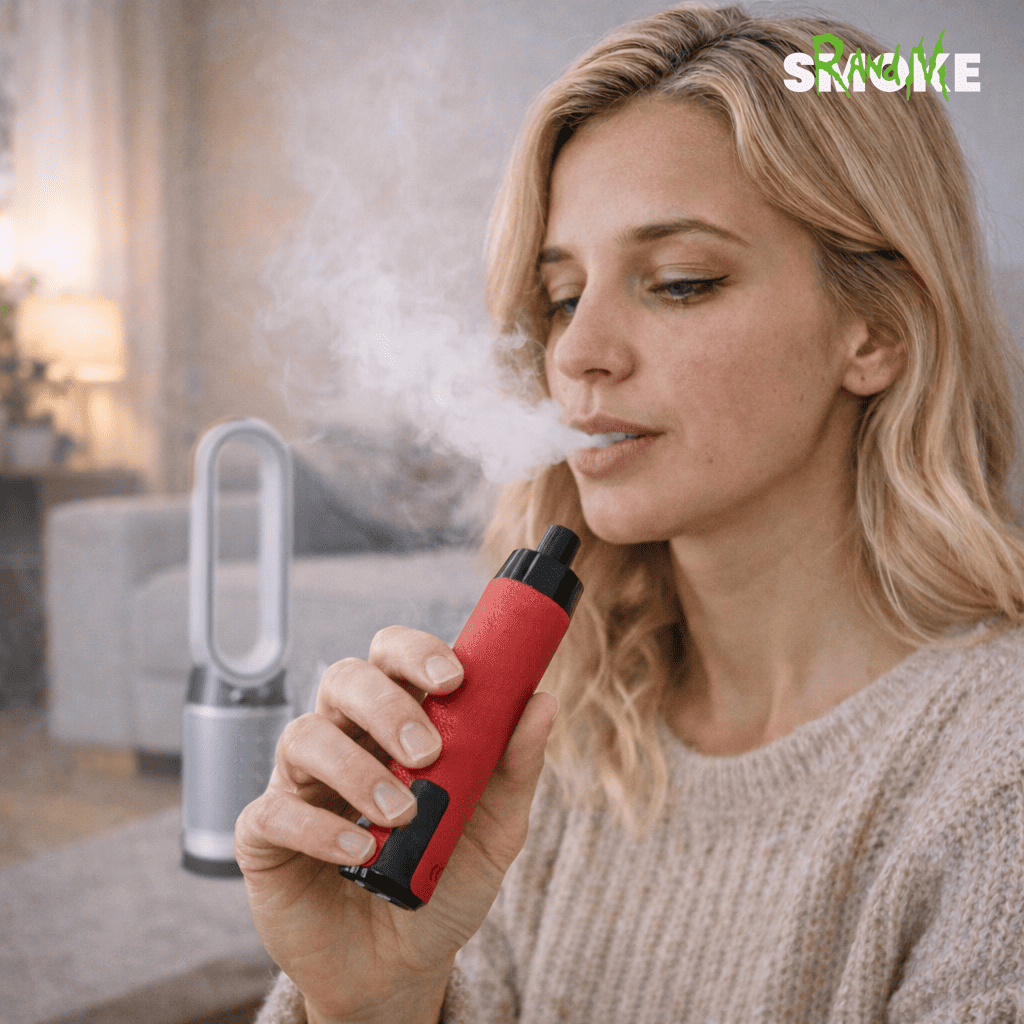
An air purifier can improve indoor air quality, but it doesn't make vaping "invisible" and is no substitute for ventilation. If you want to know what it can realistically achieve when vaping, here's a clear classification: vapor in the air, odor, and potential residue are three different issues.
View all RandM Vapes at RandM Smoke
What's actually in the air when vaping
Many call it "vapor," but technically it's an aerosol: fine droplets that spread throughout the room. How long it stays in the air depends on:
- Room size
- Air exchange
- Temperature and humidity
- Frequency of puffs
What an air purifier can really do
An air purifier can:
- Reduce particles in the air (if a suitable particulate filter is present)
- Reduce odors (especially with an activated carbon filter)
- Make the air seem "calmer" faster after a session
However, it works through recirculation. This means the aerosol is first in the room and then gradually filtered.
Where many delude themselves
An air purifier is not a shortcut to keep vaping at the same pace.
- If you vape a lot in a short time, you produce vapor faster than many devices can remove it.
- An air purifier doesn't reliably prevent residue from settling on surfaces over time. It can reduce, but not "zero out."
Ventilation beats technology
If you only chose one measure: Ventilation. Air exchange removes aerosols most directly.
In practice, the best approach is:
- brief burst ventilation
- then run the air purifier to smooth out the rest
Placement: How to make it work
Many place the device where it looks good. That's inefficient.
Better:
- Not in corners, not behind furniture
- Where air circulates
- Close enough to the occupied area, but not directly in the exhalation path
The goal is not to "suck in" a cloud, but to consistently recirculate the room air.
What to look for in a device
- Particulate filter suitable for room size
- Activated carbon filter if odor is the issue
- Sufficient air circulation per hour
- Regular filter replacement (otherwise it becomes an odor reservoir)
FAQ
Does an air purifier really help with vaping?
Yes, it can reduce particles and, with activated carbon, also reduce odors. However, it is no substitute for ventilation.
Can an air purifier completely remove vapor?
No. It reduces over time, but it doesn't prevent it from being in the room initially.
Which is better: ventilation or air purifier?
Ventilation is usually faster. The ideal is a combination.
Does an air purifier help with odor?
Significantly more so with activated carbon than without.
Why does it sometimes still smell despite an air purifier?
Because odor doesn't just "hang in the air," but also spreads to textiles and throughout the room.
Conclusion
An air purifier is a useful component for better indoor air quality, but it's not a substitute for ventilation and not a solution for uncontrolled continuous use. If you plan realistically, burst ventilation plus an air purifier will give you the cleanest and most stress-free routine.