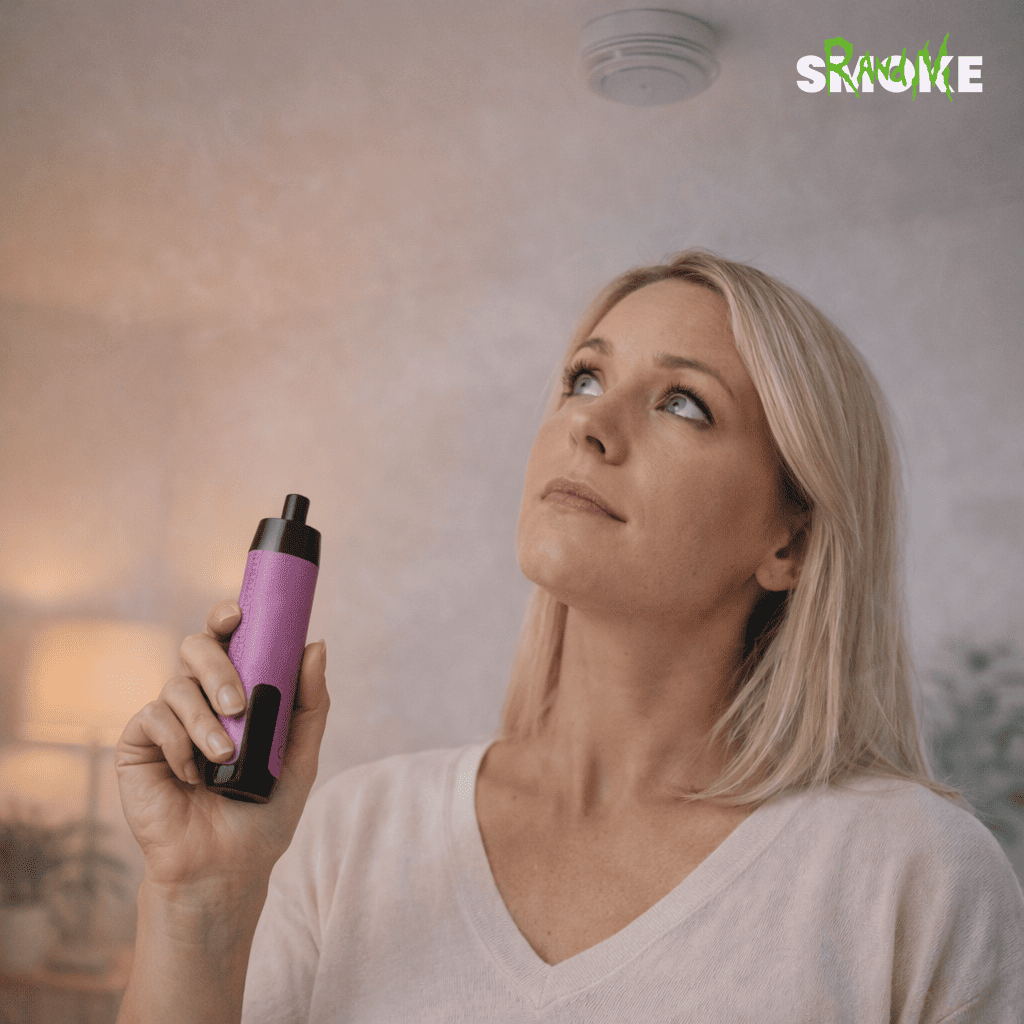

For many, vaping in bed has become part of their evening routine. The day is over, the lights are dim, the body relaxes. A few puffs on the RandM Vape, switch off briefly, then sleep. This very matter-of-factness is why the topic is so rarely questioned.
What seems harmless at first glance, however, has more influence on sleep, body perception, and indoor climate than many suspect. Not dramatic. Not panic-inducing. But relevant enough to be properly categorized. If you want an overview of which models you are using, you can find it here: RandM Vapes at a glance
Why so many people vape specifically in bed
The bed is not a neutral place. It is psychologically charged. Relaxation, security, switching off. Everything we do there is more strongly associated with rest than the same action in another place.
Many users report that they hardly vape during the day, but significantly more often in the evening. The misconception begins where relaxation is equated with sleep quality.
Relaxation is not the same as restorative sleep
Many fall asleep without problems, even though they have just vaped. This quickly leads to the assumption that vaping has no influence on sleep. This is short-sighted.
Falling asleep is only one part. What is crucial is how deep, how stable, and how restorative sleep is. This is precisely where stimuli that are set shortly before going to bed have an effect.
What happens in the body when vaping before sleep
Nicotine and the nervous system
Nicotine is not a sedative. It has a stimulating effect on the central nervous system. Many still feel relaxed because the ritual calms them, habit provides security, and it briefly triggers a positive feeling. Physiologically, however, it remains an activation. This can affect sleep quality without you directly noticing it.
Airways when lying down
When lying down, the mechanics of breathing change. Aerosols remain in the upper airways for longer. At the same time, the swallowing frequency decreases. This more often leads to mucous membranes appearing drier, stimuli having contact for longer, and a scratchy throat being more noticeable in the morning. Many then blame the vape for this, although position and timing play a major role.
Perception and smells at night
Even during sleep, the body perceives stimuli. Smells are not consciously processed, but can create subconscious restlessness. This explains why some people seemingly sleep well, but do not feel rested in the morning without being able to name a clear cause.
The bedroom is a sensitive space
Textiles store more than you think
Mattresses, pillows, duvets, and curtains absorb aromas and aerosols. Not visibly. Not immediately. But noticeably over weeks. Those who regularly vape in bed change the basic air quality of the bedroom.
Little air exchange at night
The bedroom is rarely ventilated at night. The vapor spreads in the room, is hardly diluted, and lingers longer than in rooms where there is constant movement and air exchange during the day.
Proximity to the face
In bed, vaping is often done closer to the body. Less distance means higher local concentration. Especially with intense flavors, this can make a noticeable difference.
Common symptoms and why they are misinterpreted
Scratchy throat in the morning
Often the RandM Vape is blamed. In reality, dry room air, aerosols from the previous evening, and a lack of air exchange play together.
Restless sleep
Not dramatic, but fragmented. Sleep seems more superficial, although enough hours were slept.
Altered taste perception the next day
Overstimulated mucous membranes react more sensitively. Flavors appear flatter or more artificial.
These effects are rarely dangerous, but they need to be explained, otherwise one is constantly "interpreting" the device instead of changing the routine.
RandM Vapes in the evening context: what really matters
The product itself is rarely the core. The crucial factors are timing, environment, frequency, and space. Those who clearly separate these factors avoid most negative effects.
The authenticity factor: only relevant if something is truly atypical
If sleep problems or a scratchy throat occur, it's usually due to routine and room air. Authenticity only becomes relevant if additional things occur that don't plausibly fit the situation, such as a persistently unusual smell, a noticeably chemical impression, or significantly different behavior across several devices.
The biggest misconceptions about vaping in bed
Many argue similarly: "I only vape for a short time," "it doesn't matter without nicotine," "I do fall asleep," "you notice it immediately." These assumptions fall short. Sleep reacts with a delay. Effects often only appear after days or weeks as a pattern.
How to better combine vaping and sleep
- Build in a time buffer: The last puff not directly in bed. A 20 to 30-minute break often makes a noticeable difference.
- Do not vape lying down: Vaping sitting or standing before going to bed reduces irritation in the airways.
- Ventilate before sleeping: Brief shock ventilation significantly reduces the burden in the room.
- Consciously choose aromas: In the evening, subtle profiles are often more pleasant than extremely sweet or strongly cooling varieties.
- Breaks instead of sessions: Two short puffs and then stopping often works better than "five more minutes."
Good to know: Why many effects are not immediately noticeable
Sleep problems rarely have a single cause. Vaping often acts as an amplifier, not a trigger. This is precisely why the connection is so often overlooked and only recognized as a pattern later.
FAQ
Is vaping in bed fundamentally bad?
Not automatically, but it increases the likelihood of poorer sleep quality and dry mucous membranes.
Does nicotine before sleep make a difference?
Yes. Even smaller amounts can have a stimulating effect and influence sleep phases without you immediately noticing it.
Why is my throat scratchier in the morning?
Mostly due to dry air, aerosols from the previous evening, and a lack of air exchange in the bedroom.
Should you vape in the bedroom?
From a practical point of view, it is the most unfavorable place, because air exchange and textiles exacerbate the issue.
Does the brand make a difference?
Not primarily. Timing, room, and puffing behavior are more decisive.
How do I know if my RandM Vape is original?
Via the scratch code and verification.