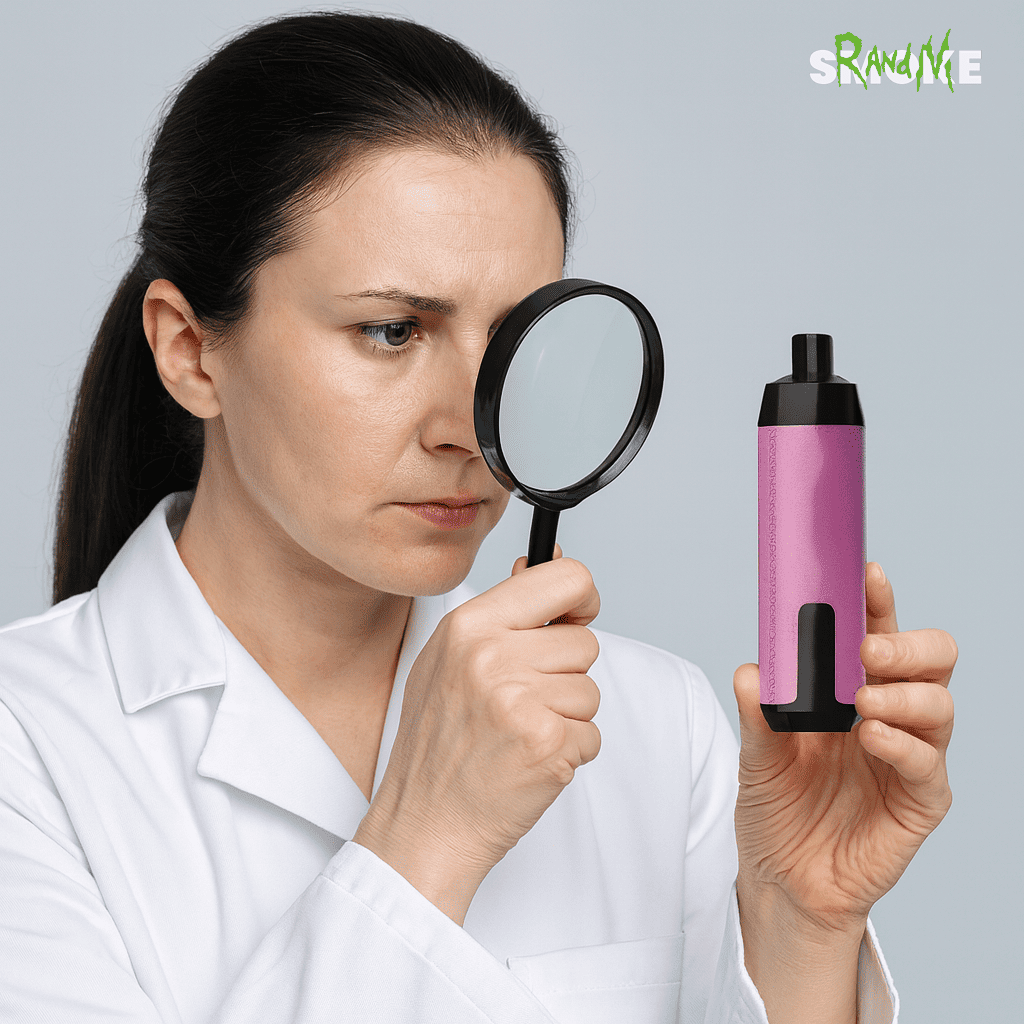
Modern RandM Vape fakes are now barely distinguishable from originals. This article shows what fake vapes really look like today, why even experienced users overlook them, and how you can reliably identify genuine RandM Vapes.
The uncomfortable reality: Fakes are no longer cheap and obvious
Many still believe you can spot fakes immediately: cheap plastic, crooked printing, "weird" taste. That was in the past. Today, fakes are often deliberately designed to impress at first glance.
Counterfeiters primarily copy what is most in demand. This is precisely why copies often appear in highly sought-after series. Not because these models are "inferior," but because that's where the money is. Anyone who thinks fakes are automatically poorly made underestimates the market.
Why even experienced users are fooled
The most common misconception is: "I'll notice it immediately, I've been using it for years."
In practice, you often only notice it later. Modern fakes are optimized to make a good first impression: the packaging looks consistent, the device looks clean, the first puff is intense. The problem arises when the copy has to perform over time.
A typical progression is like this: At first, everything seems normal. After hours or days, something changes. The taste becomes bland or strange, the throat feels more sensitive, the draw changes. And then the wrong conclusion is drawn: "The brand has deteriorated." Often, that's not true. Often, the origin is not true.
What modern fakes look like in practice
Fakes are rarely identified by a single detail. The overall impression of printing, manufacturing, behavior, and progression is crucial.
Irregularities that repeatedly appear in copies:
- The packaging looks "right," but details are minimally imprecise: fonts, edges, color tones, gloss, transitions.
- The scratch code is present, but the verification does not provide a clear result or leads to an implausible page.
- For devices with a display: the display and reaction are uneven or behave erratically.
- The taste is strong at first but quickly becomes unclear or "thin."
- The smell is unusually intense or seems "chemical" compared to what you usually know.
Important: A single characteristic is not enough for a judgment. Two to three points together, however, are a clear warning signal.
Why low prices are almost always a warning sign
The phrase "The shop just has better conditions" is usually self-reassurance. For highly sought-after products, purchase prices are not arbitrary. Anyone who consistently sells significantly below the usual price level rarely saves on the margin. They save on the goods.
A one-time discount is not the point. The pattern is crucial: consistently "too good to be true" plus a lack of transparency is the classic scenario.
The most important step: Verification instead of gut feeling
If you take only one thing from this text, let it be this: experience does not replace verification.
Every genuine RandM Vape has a scratch code as a security feature. The code is not decorative. It is the only quick way to plausibly verify origin and authenticity. Everything else remains interpretation.
If a code "works" multiple times, that's not luck, but a warning sign. And if a shop does not actively address the verification issue, that is also a signal. Reputable suppliers have no reason to hide authenticity.
Typical situations where fakes are particularly common
Fakes rarely end up where you find peace and transparency. They end up where speed, pressure, and price dominate.
The risk increases especially when:
- you buy at very short notice and want to decide quickly
- the provider does not provide clear information about the origin
- there is no proper support channel
- "bargains" are the main argument
If you already have a gut feeling when buying, it's usually not intuition. It's a pattern your mind registers.
What you should do practically if you are unsure
If you suspect something is wrong, keep it simple:
- Don't continue "testing" by taking more puffs. That won't bring clarity, only more irritation.
- Check the scratch code and take the result seriously.
- Evaluate the progression: Does it get worse after a short time, even though usage remains the same?
- Check the source: Where does the device really come from, not where does it say online?
The more soberly you work through this, the faster you'll get out of overthinking and misinterpretation.
FAQ
How do I recognize a fake RandM Vape?
Mostly by the overall picture: verification via scratch code, implausible test result, unusual smell, rapid quality drop in taste, or atypical device behavior.
Are all cheap offers automatically fakes?
Not automatically. But consistently well below market price plus a lack of transparency is a strong warning sign.
Why does a fake vape often taste good at first?
Because many fakes are optimized for the first impression. The weaknesses often only become apparent after a short period of use.
Can I check the scratch code multiple times?
For genuine codes, multiple checks are typically not "arbitrary." Several successful checks are more of a warning sign than a quality feature.
What is the safest method to avoid fakes?
Buy from providers who clearly communicate origin and actively enable authenticity checks. Additionally: always check the scratch code before discussing at length whether "it seems strange."